Why InsideSLM?
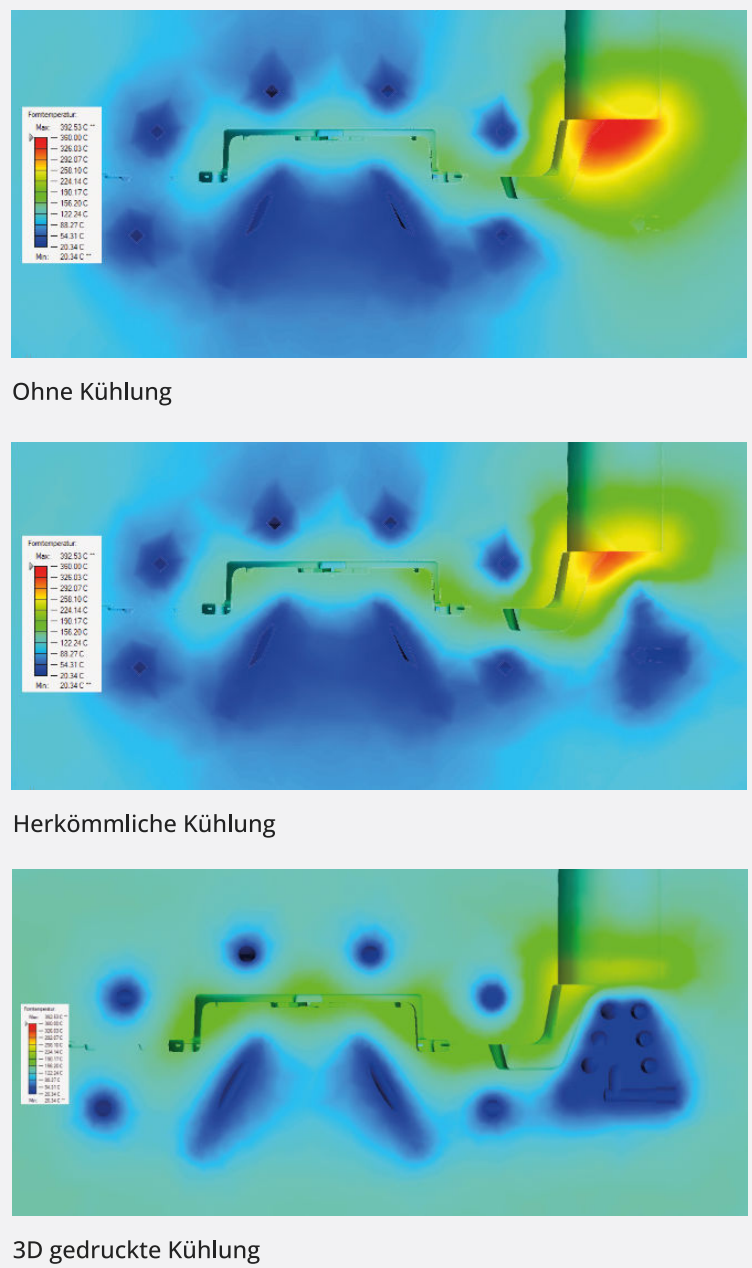
After the shot, the mold’s temperature must be lowered quickly and evenly so that the aluminum solidifies.
If the part remains in the mold for too long, it becomes difficult to remove. This results in warping and friction marks.
Since the area around the sprue (the inlet for liquid aluminum) contains the most material and reaches the highest temperature, it usually determines the solidification time.
This approach can also shorten the cooling time and reduce the formation of cavities in areas with hot spots (hot areas within the part).
Advantages InsideSLM:
- Reduces cycle times in the process
- Minimizes the risk of shrinkage cavities and porosity in the casting
- Enables minimal spray volume
- through effective cooling
- Eliminates hot spots in the mold
This results in improved quality of die-cast and injection-molded parts, as well as shorter cycle times.
Conformal cooling
We use 1.2343 instead of 1.2709 because 1.2343 has high hot strength, greater toughness, and higher thermal conductivity, as well as better resistance to hot cracking.
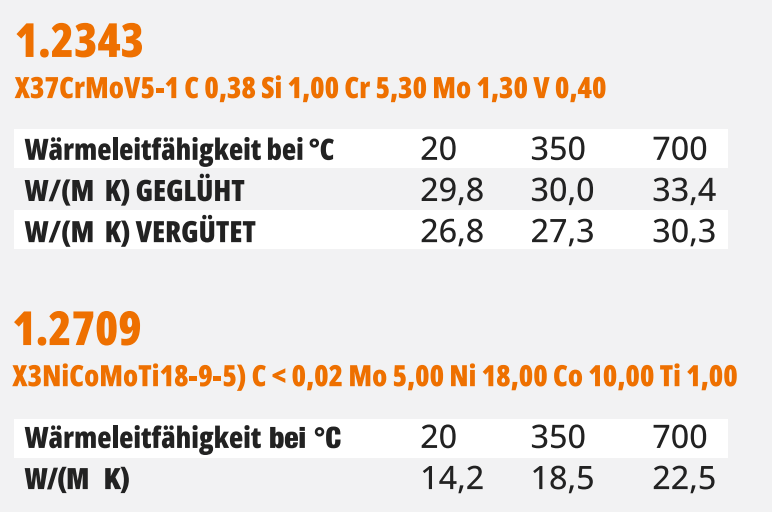
It is therefore more suitable for die casting and injection molding.
Parts manufactured with InsideSLM from 1.2343 can be individually hardened to a hardness of 42 HRC to 52 HRC and used in the same way as components made from standard 1.2343.
There are therefore no limitations compared to conventional manufacturing.
InsideSLM with 1.2343
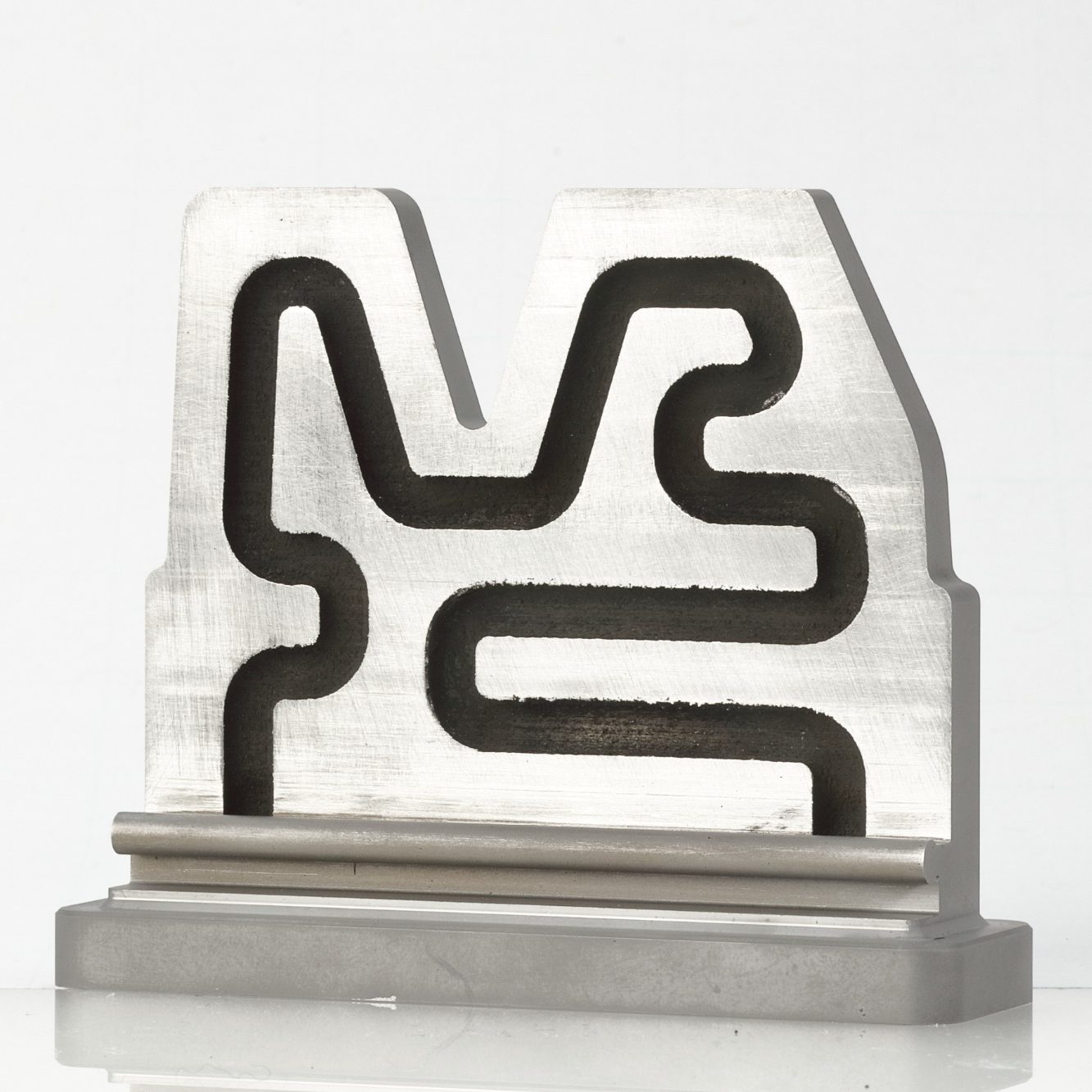
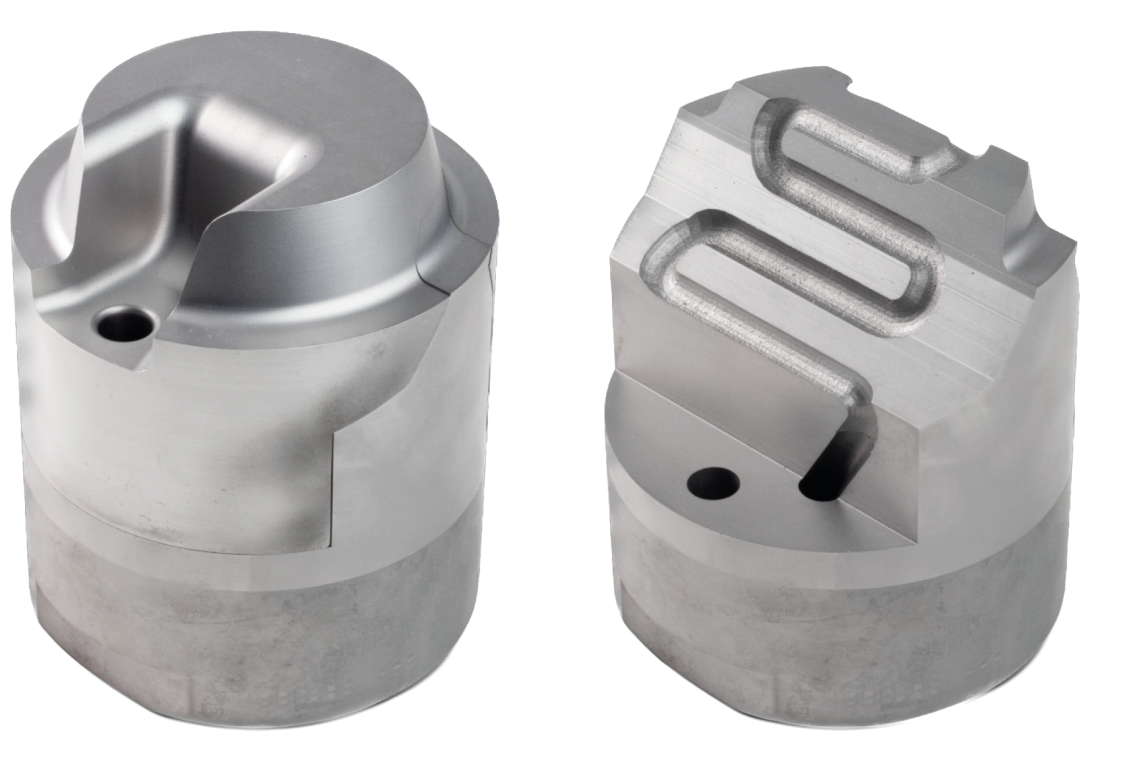
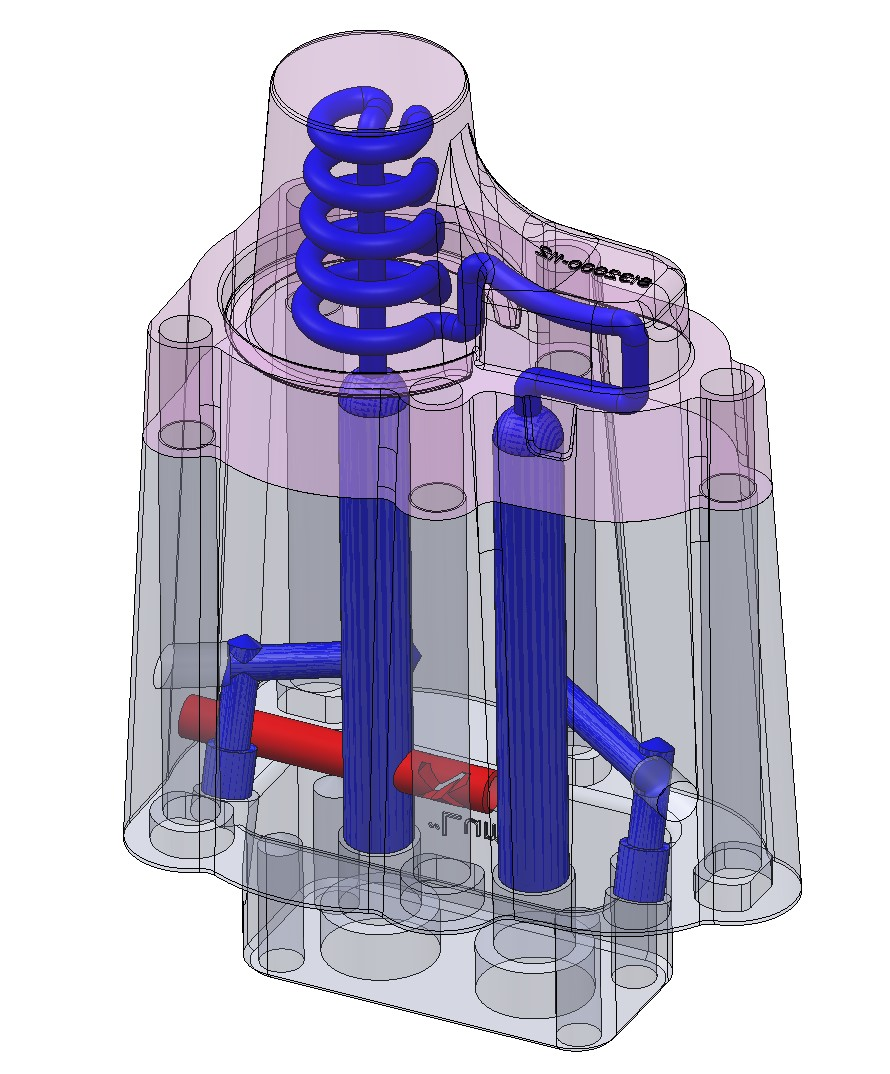
While conventional cooling channels can only be incorporated by drilling and are usually straight, contour-following cooling using Inside SLM (3D printing) allows the cooling channels to be incorporated in 3D along the contour.
This enables them to be adapted to the geometry even in the case of complex paths (e.g., spirals).
We manufacture components using a hybrid construction method, meaning we use “natural” 1.2343 as long as a straight borehole can be drilled; only when 3D cooling is required do we use the InsideSLM 3D printing process.
Gray = “natural” 1.2343ESU and red = 1.2343 powder
This saves costs and production time.
There is no difference in quality between “natural” material and 3D-printed material. Both achieve a NADCA B-C microstructure.
The hardness can be adjusted between 42 and 52 HRC.
Therefore, there are no limitations.
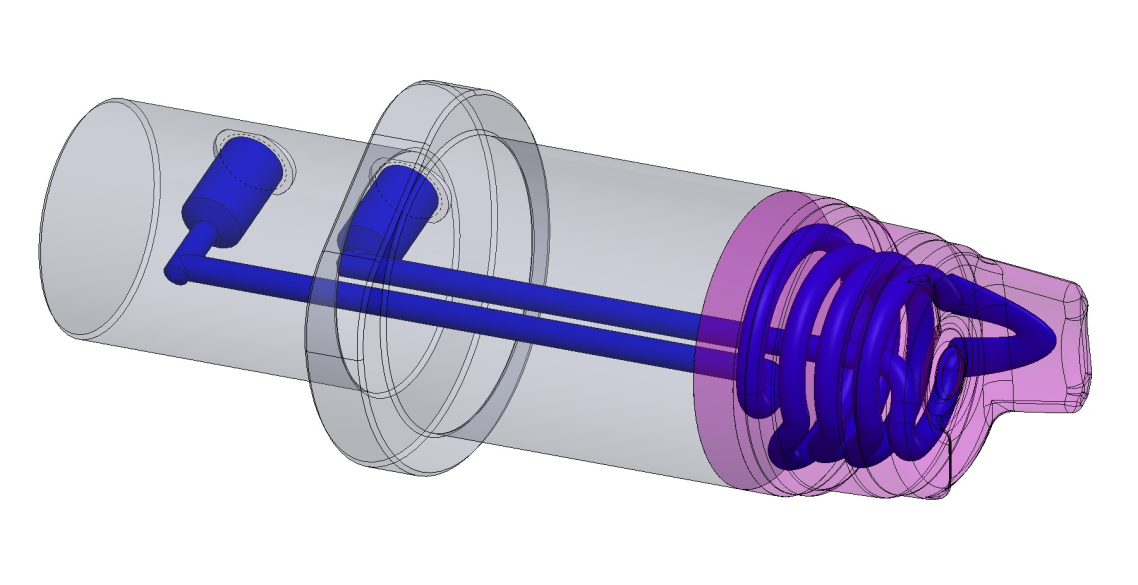
InsideSLM Hybrid Construction
InsideSLM – the game-changer for die casting and injection molding.
Ask us—we always have a solution.
Contact
Tel.: +49 9171 83 99 75-0